Which standards are supported?
Open Heatloss Studio implements the official Dutch and European standards for heat loss calculations. Fully in line with the applicable methodologies for heating design and energy performance.
- NEN-EN 12831-1:2017 — Energy performance of buildings, method for calculating the design heat load
- NEN 12831-1+NEN 1:2019/A1:2021 — Dutch national annex
- ISSO 51:2023 — Heat loss calculation for dwellings and residential buildings
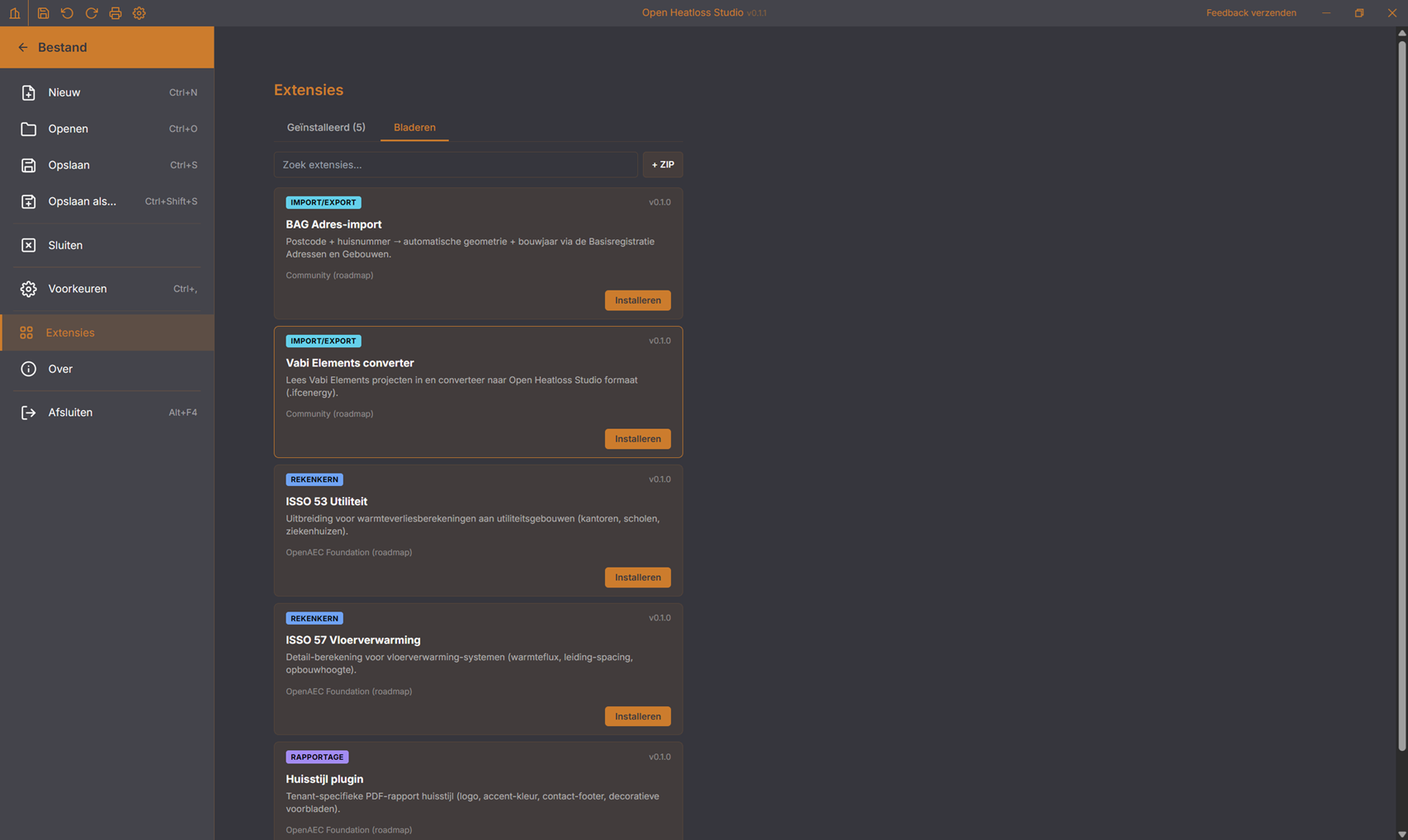
- ISSO 53/57 — Methodologies for non-residential and complex buildings
- NTA 8800 — Integrated energy performance (BENG)
Why Open Heatloss Studio?
Heat loss calculations are essential for the design of heating systems and building energy performance. Open Heatloss Studio offers an accessible, open source alternative to expensive commercial software, fully conforming to NEN 12831.
Built on a Rust calculation core for maximum speed and accuracy — thousands of rooms are calculated in seconds. Everything runs locally, no cloud dependency, your project data stays yours.
Features
NEN 12831 calculations
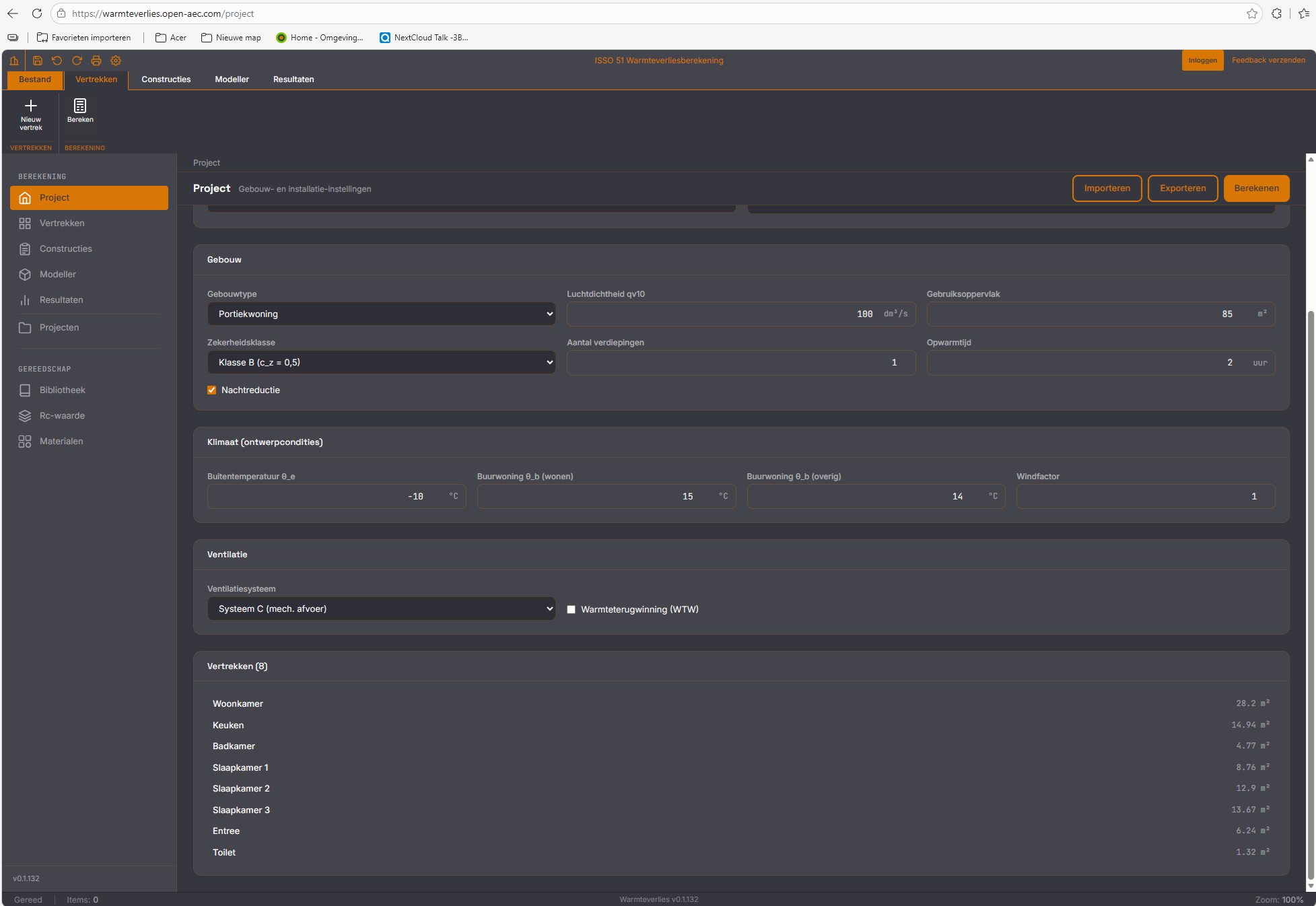
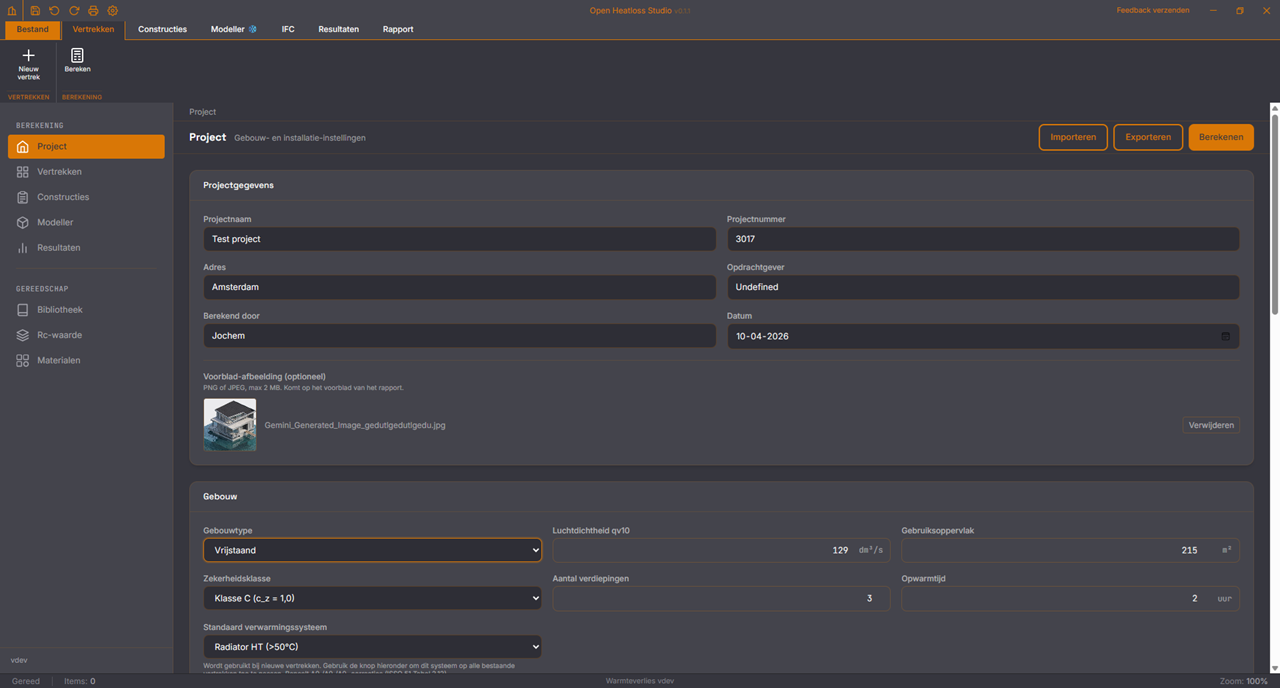
Full heat loss calculations conforming to NEN 12831. Accurate results for heating system design.
ISSO 51:2023
Specific methodology for heat loss calculation of dwellings and residential buildings according to ISSO publication 51 (2023).
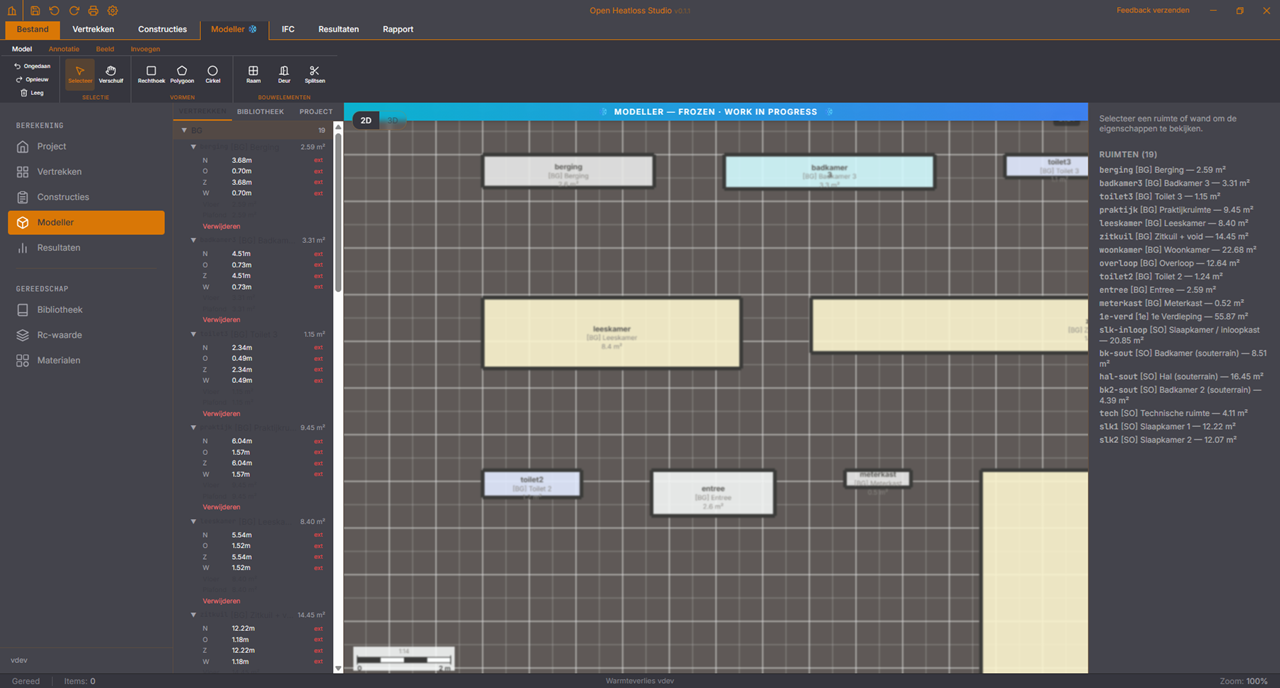
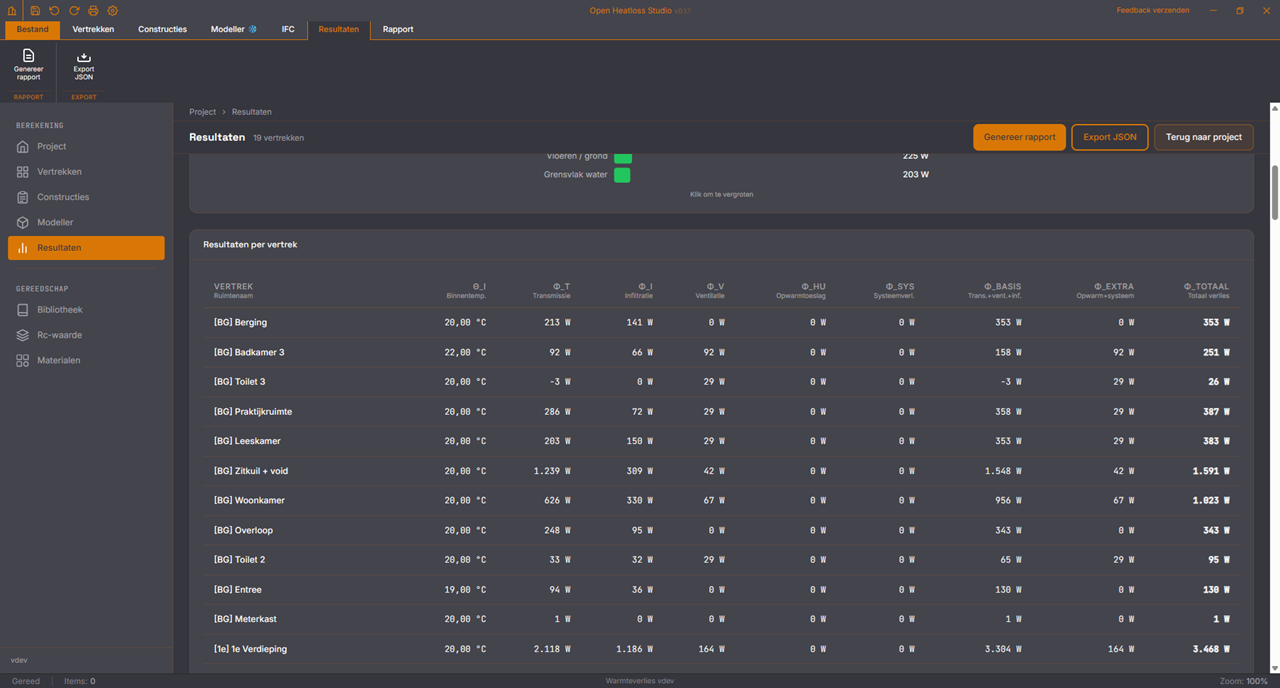
Transmission losses per room
Detailed calculation of transmission losses per room, including correction factors for ground-coupled constructions.
Ground-coupled constructions
Correction factors for floors on grade, basement walls, crawl spaces and adjacent unheated rooms (b-factors).
Ventilation losses
Calculation of ventilation losses based on ventilation system, air volume flow and infiltration.
Heat-up allowance
Calculation of the extra capacity needed to heat up after a night setback — in line with the tables in NEN 12831 Annex F.
KNMI climate data
Design indoor and outdoor temperatures per location. KNMI climate zones selected automatically from the postcode.
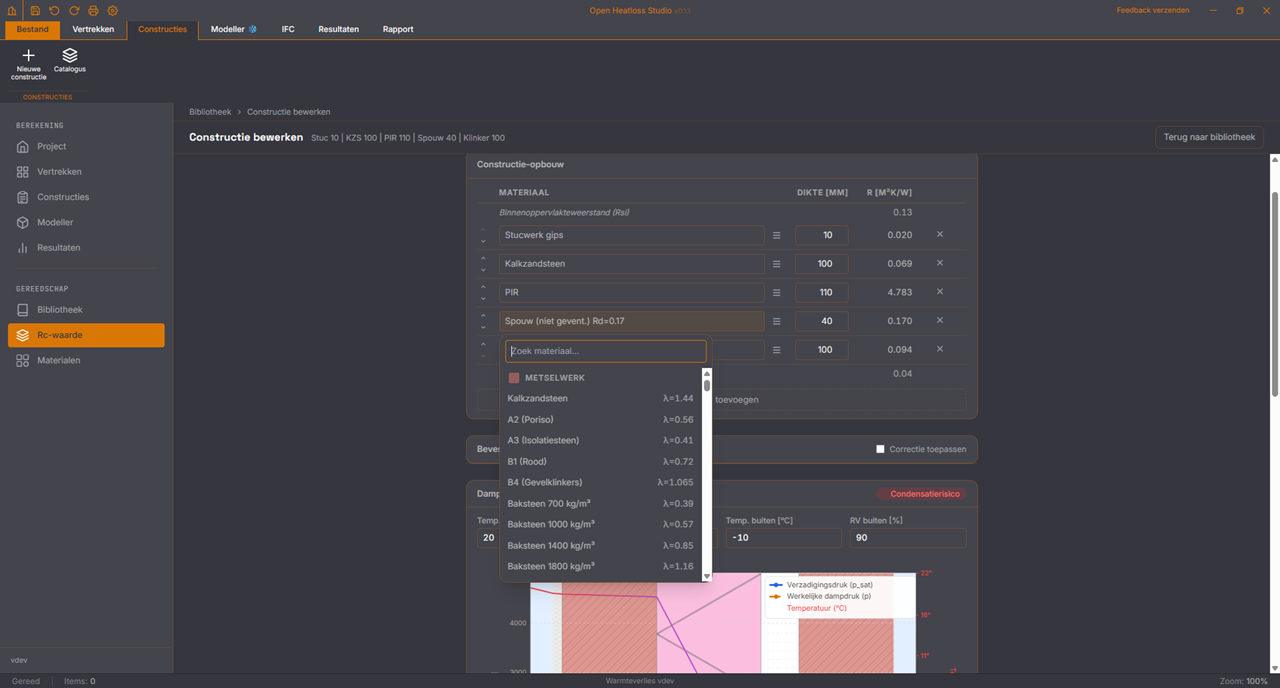
U-value calculator
Calculate U-values of constructions layer by layer. Material library with λ-values conforming to NEN-EN 12524 and NTA 8800.
Thermal bridges
Linear thermal bridges (Ψ) according to NEN-EN ISO 14683. Default values or detail-based calculation per junction.
IFCX integration
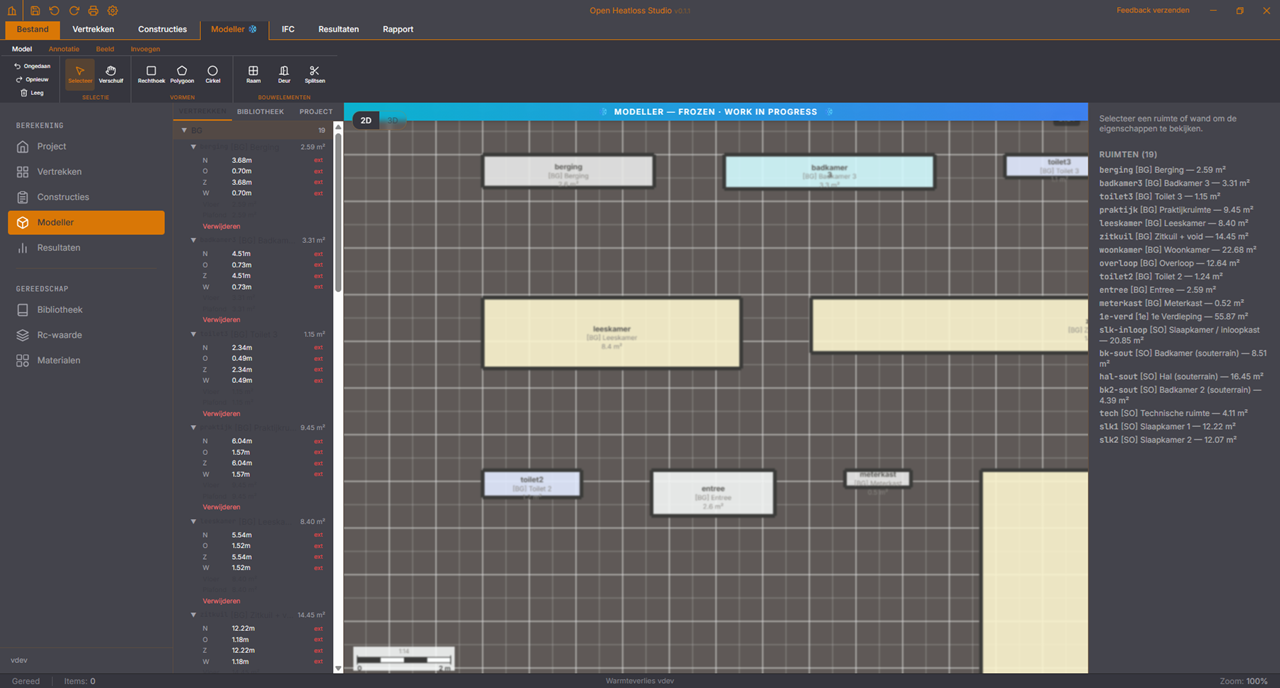
Import building geometry and construction properties directly from IFCX models for faster input.
Zoning
Group rooms by heating zone, controller or plant location. Different setpoints per zone are possible.
Radiator sizing
Determine radiator output per room from heat loss, water temperature and exponent. Selection from a manufacturer library.
Underfloor heating
Underfloor heating output per room, with system temperature, pipe spacing and flow temperature.
Heat pump sizing
Preliminary heat pump sizing based on total heat loss at design temperature. SCOP indication per type.
Boiler capacity
Boiler capacity including domestic hot water, simultaneity factors and buffer volumes.
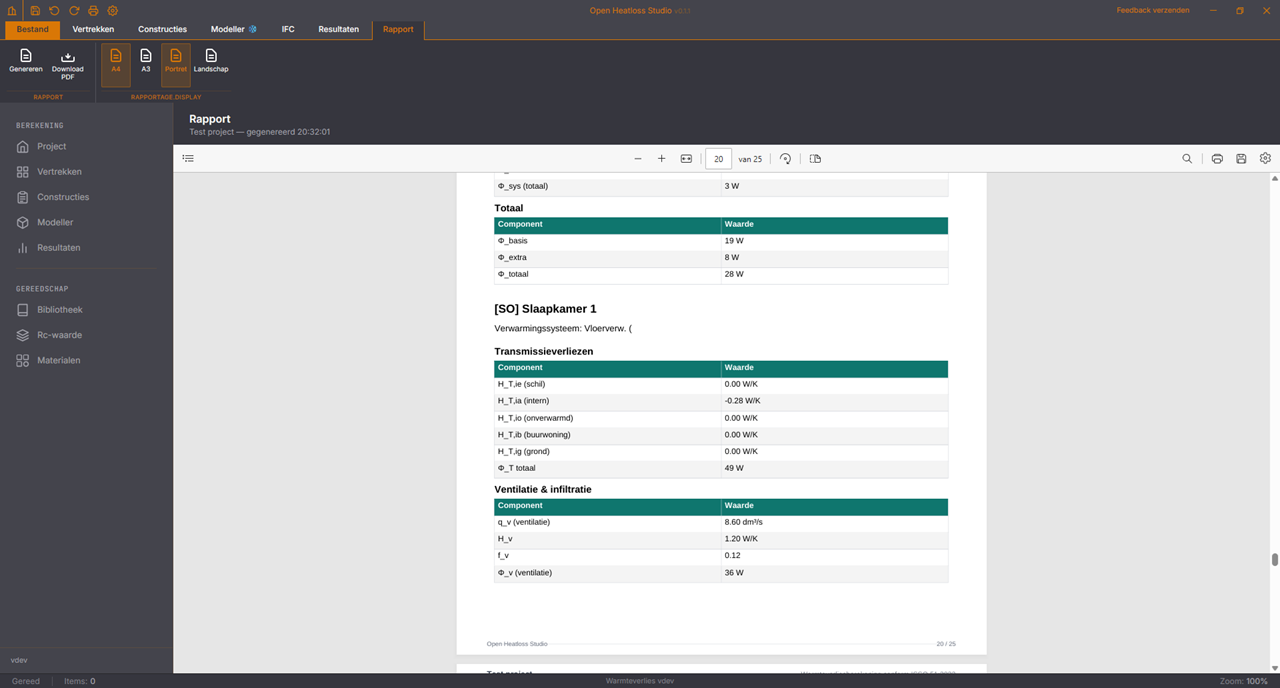
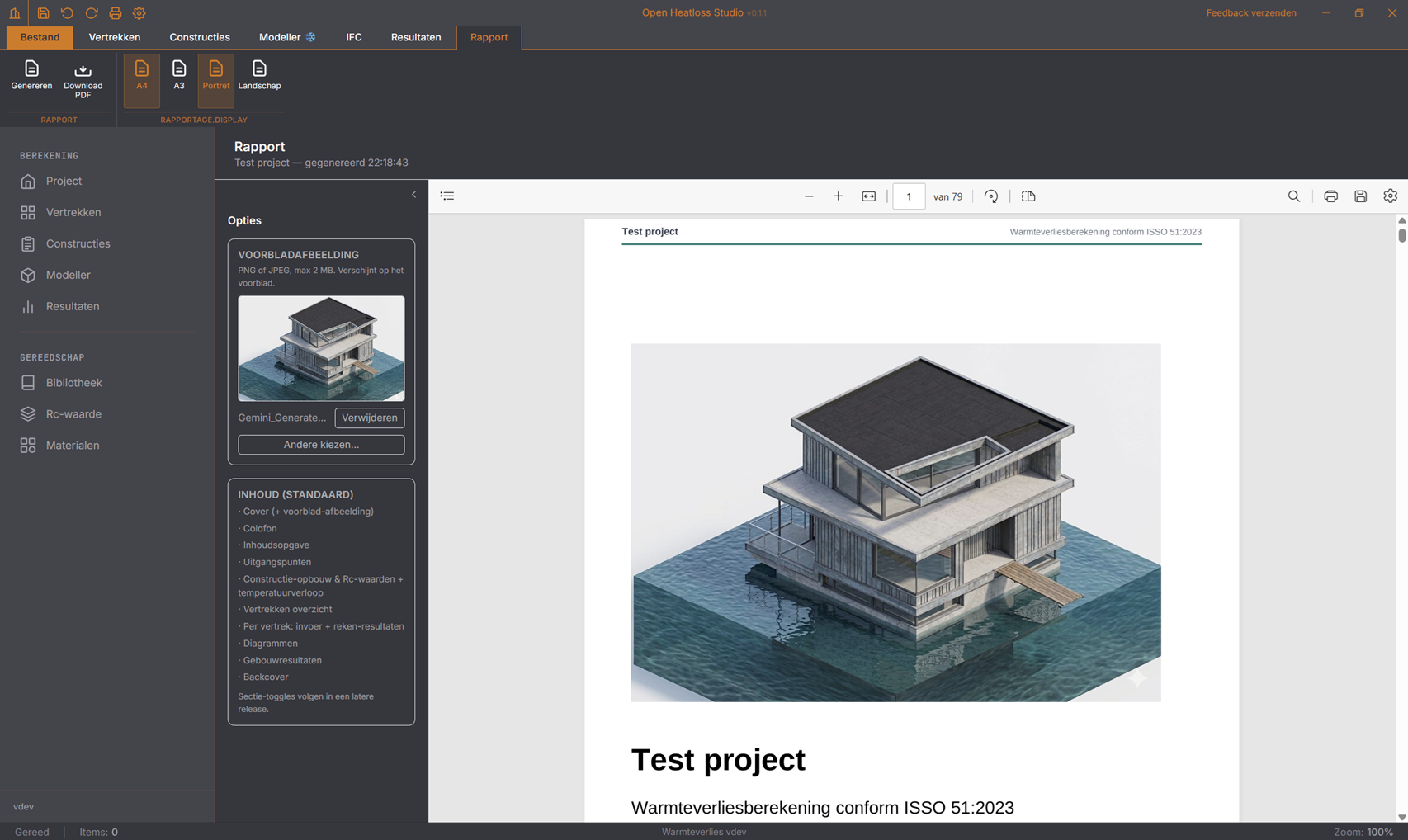
Report generation
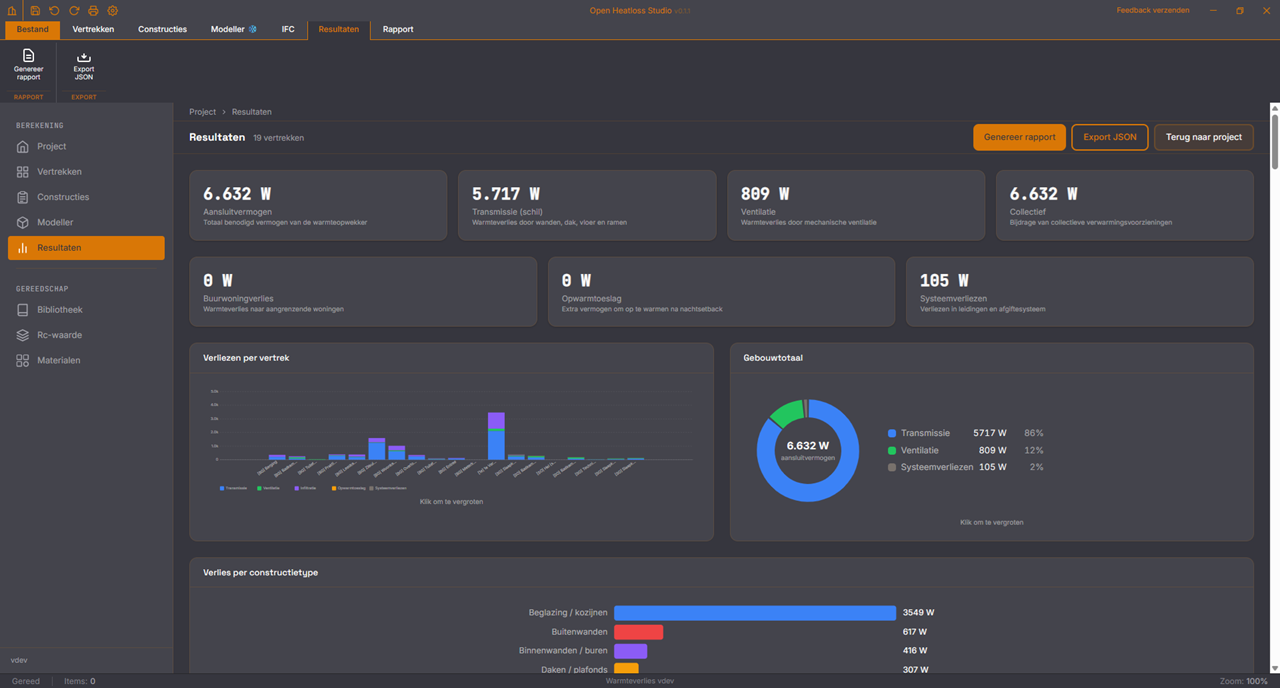
Generate clear reports with heat loss per room, total overviews and graphical representations.
Exports
Export to Excel (XLSX) for further analysis, IFCX for BIM integration, and JSON for automation and API links.
Building physics library
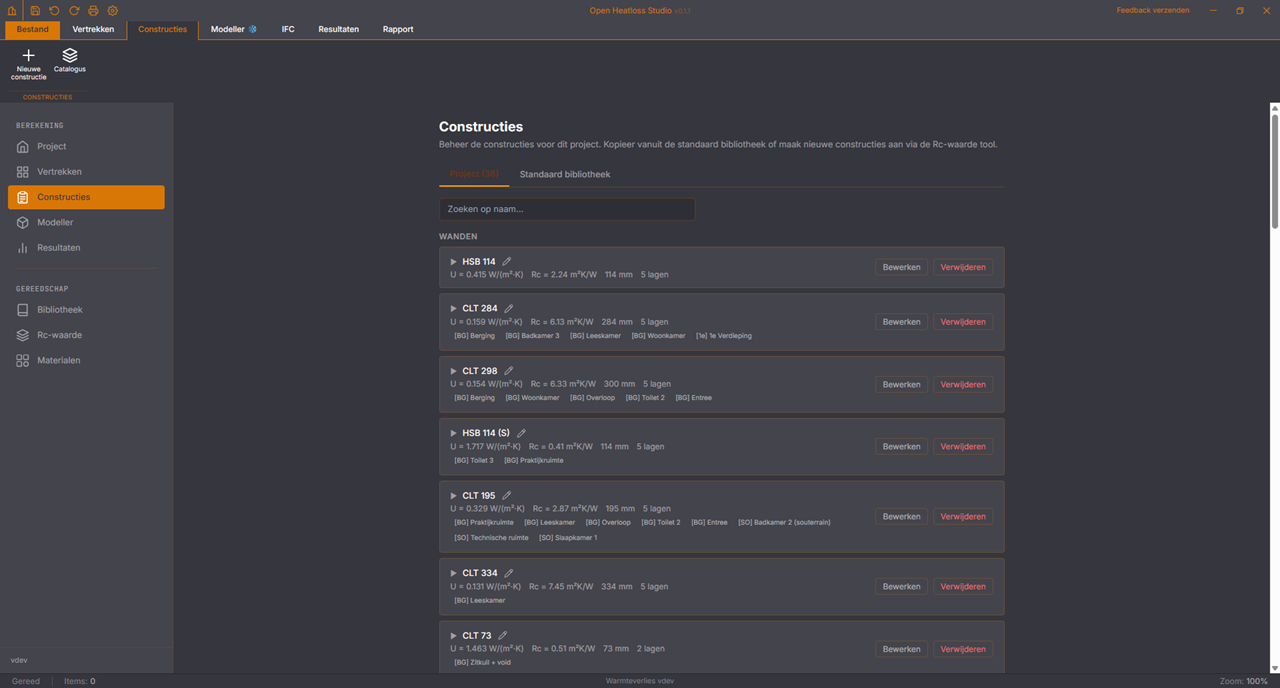
Extensive library with material properties, construction build-ups and standard U-values.
Construction build-ups
Predefined construction build-ups (façades, roofs, floors) with automatic U-value. Create and reuse your own build-ups.
Variant study
Compare several design variants side by side. What-if analyses for insulation, ventilation and solar orientation.
Dashboard
Real-time overview: total heat loss, loss per zone, top 10 rooms with the highest loss, energy indicators.
CLI & batch
Command-line interface for batch calculations. Integrate into CI pipelines or automate across portfolios.
100% local
All calculations run locally on your own machine. No cloud, no tracking. Your project data stays yours.
Cross-platform
Available for Windows, macOS, Linux and as a web application. Tauri 2 + Rust for maximum performance.
Technology
A Rust calculation core for the standards-compliant calculations, a TypeScript/SolidJS front-end for the interface, and Tauri 2 for cross-platform distribution. The same stack as the rest of the OpenAEC ecosystem, for seamless integration.