v2026.9.0
Última13 días · 289 commits · +60.405 líneas de código
CUADRÍCULA DE TAREAS
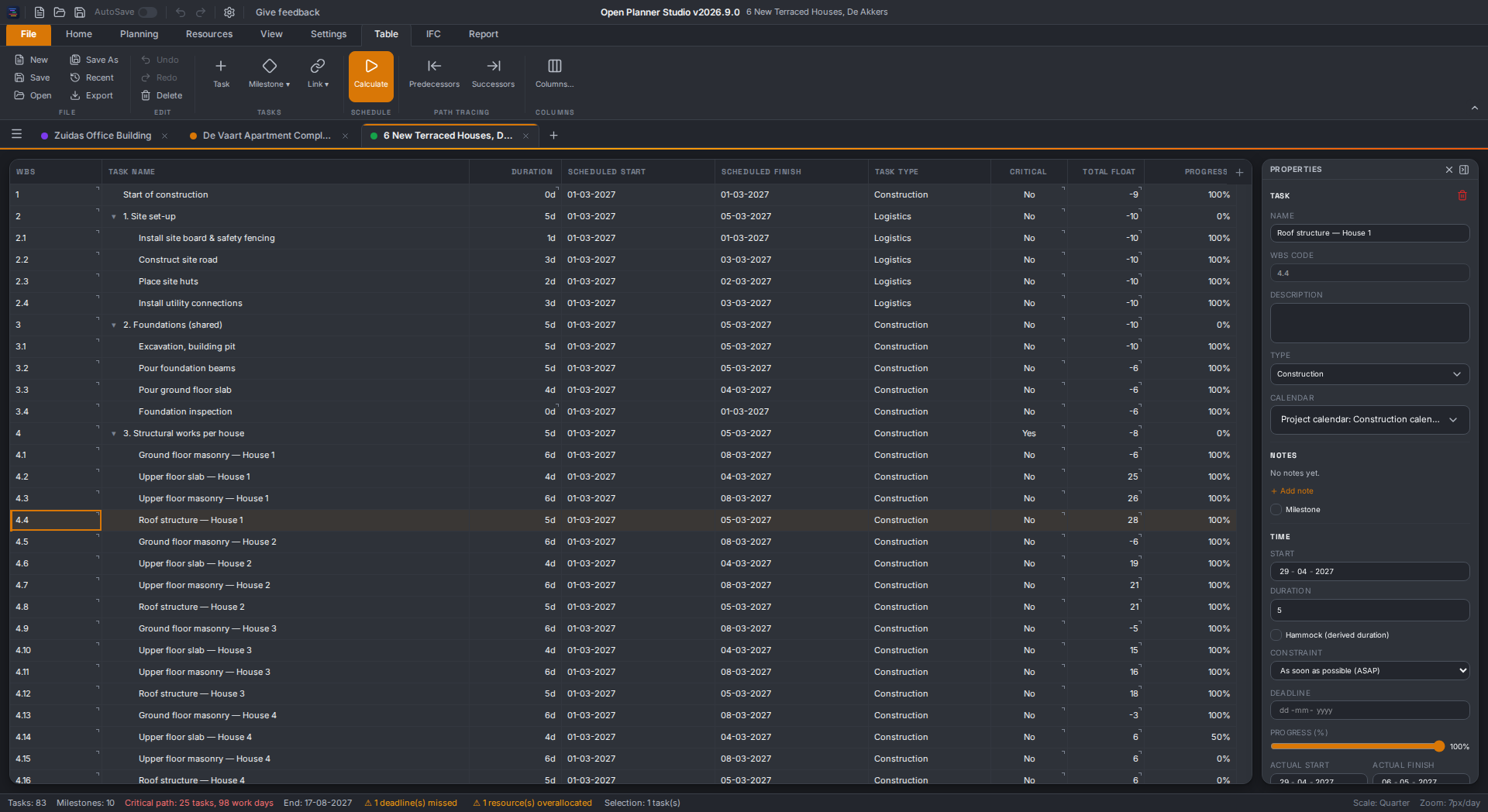
Edite más rápido en una cuadrícula compartida
Use la misma cuadrícula accesible y configurable en Gantt y Tabla.
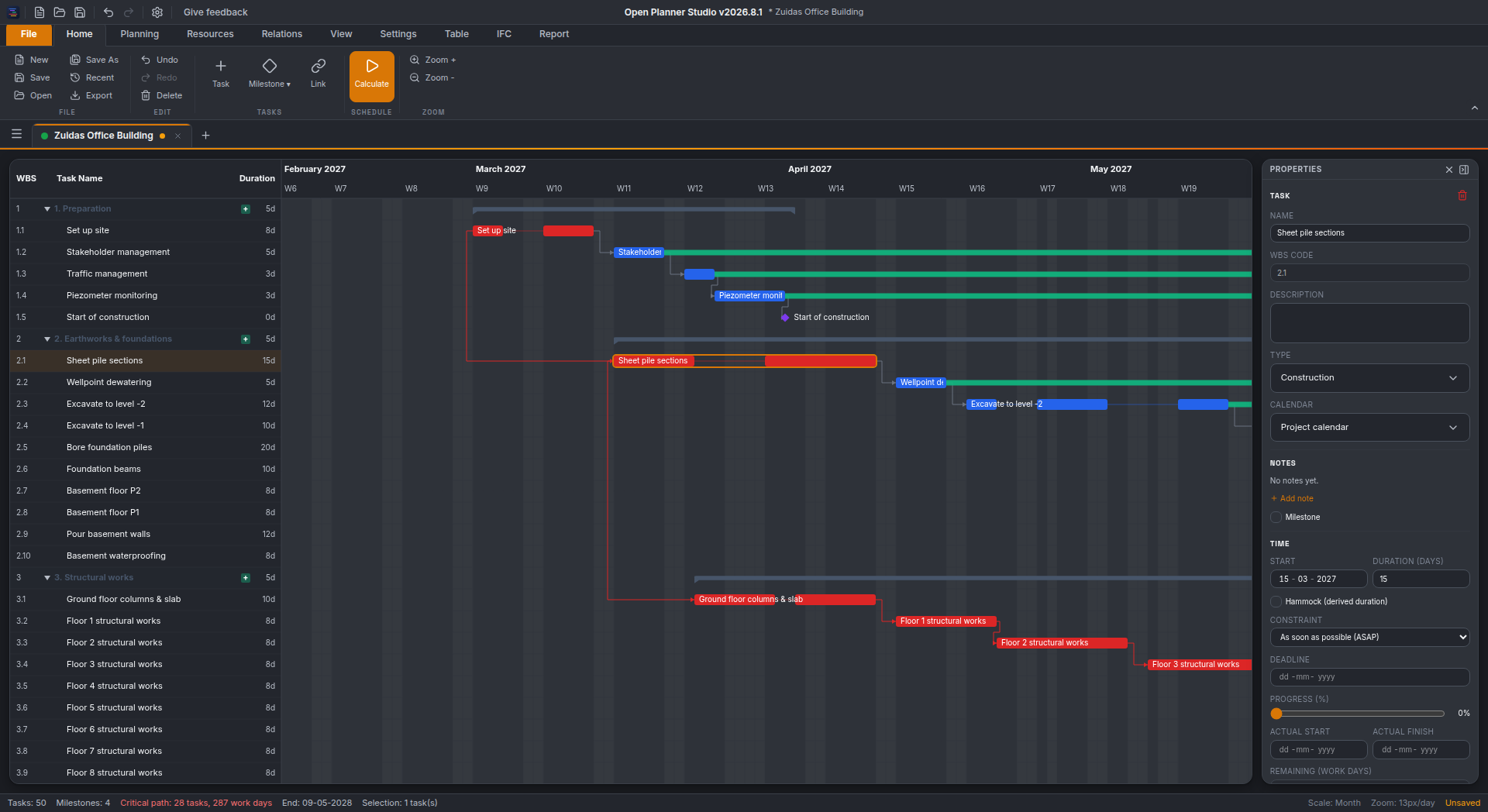
- PLANIFICACIÓNPlanifique en días u horas
- INFORMESInformes y vista previa más nítidos
- AUTOGUARDADOAutoguardado real por documento
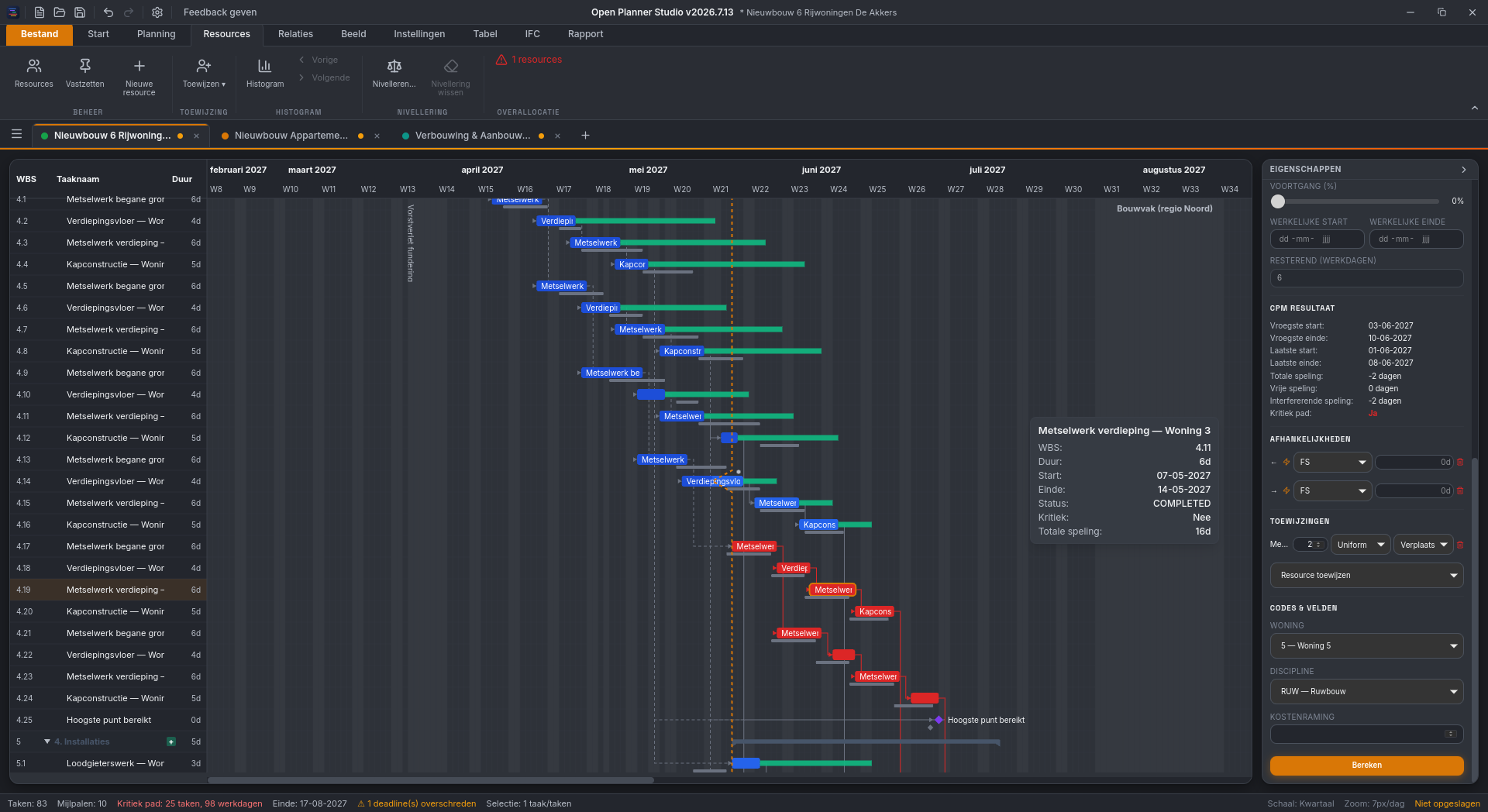
- GANTTNavegue el plan más directamente
This is a substantial planning-workflow release: 287 commits since v2026.8.1 concentrate on a single, accessible task grid; explicit day and hour work; more capable reporting; safer extension handling; and reliable saving and resource leveling. The headline features are backed by browser, planning, library and MCP regression coverage rather than being isolated interface changes.
Added
- One virtual, accessible task grid now powers both the Gantt's task list and the full Table view. It virtualizes large task sets while keeping keyboard cell navigation, selection, editing, pinning and row operations consistent between the two surfaces. The grid has a complete column registry, a column chooser with recently used fields, and personal per-surface column and scroll preferences.
- Spreadsheet-style task editing is now available in that grid. Multi-cell TSV copy/paste is planned and applied atomically, preserves supported values instead of flattening them to text, repeats a pasted tile where appropriate, and skips read-only cells. Task assignments, scheduling and progress fields can be edited from the same surface.
- Dependencies can be edited directly in a task-grid cell. The relation editor supports the relation details and linked-task navigation needed by the former dedicated Relationships surface; it also preserves external relation tokens rather than turning them into unstable local links.
- Projects can define and use personal task types. A type is reusable on the local installation while its stable identity and readable name are stored with the project, so tasks remain intelligible after IFC exchange or on another installation.
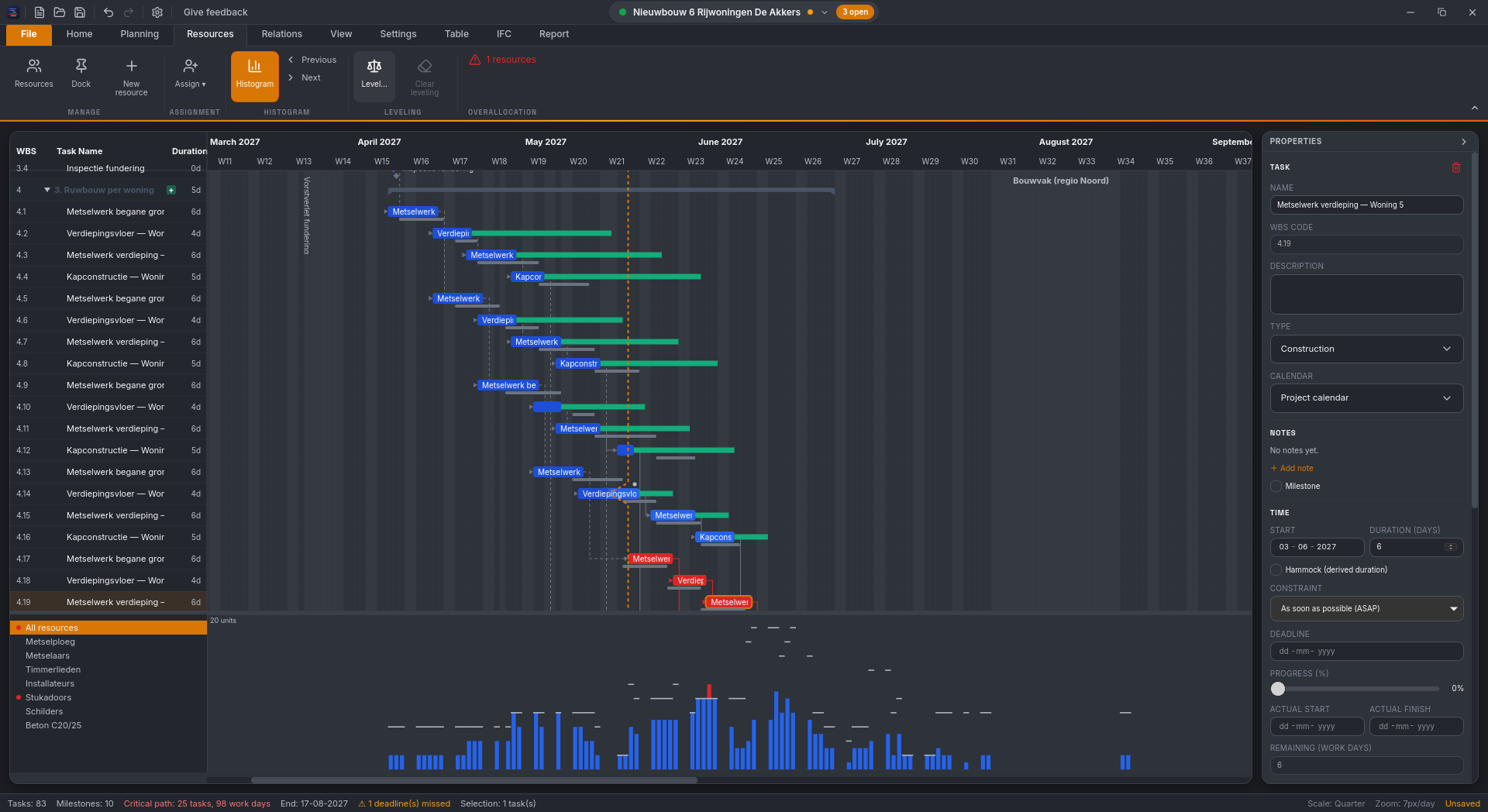
- Task duration has an explicit per-task unit: Days or Hours. Mixed day/hour projects keep the unit that the planner chose; an hour task consumes real working minutes in its effective calendar instead of being silently converted to a day count. The same unit survives IFC, MSPDI and P6 round-trips; CSV remains day-based and does not claim to preserve it.
- Calendars can now express a configurable intra-day break from their simple shift pattern. The resulting working-time bands are used by hour scheduling, resource loading and leveling; users can therefore model, for example, a lunch break without manually constructing every weekday band.
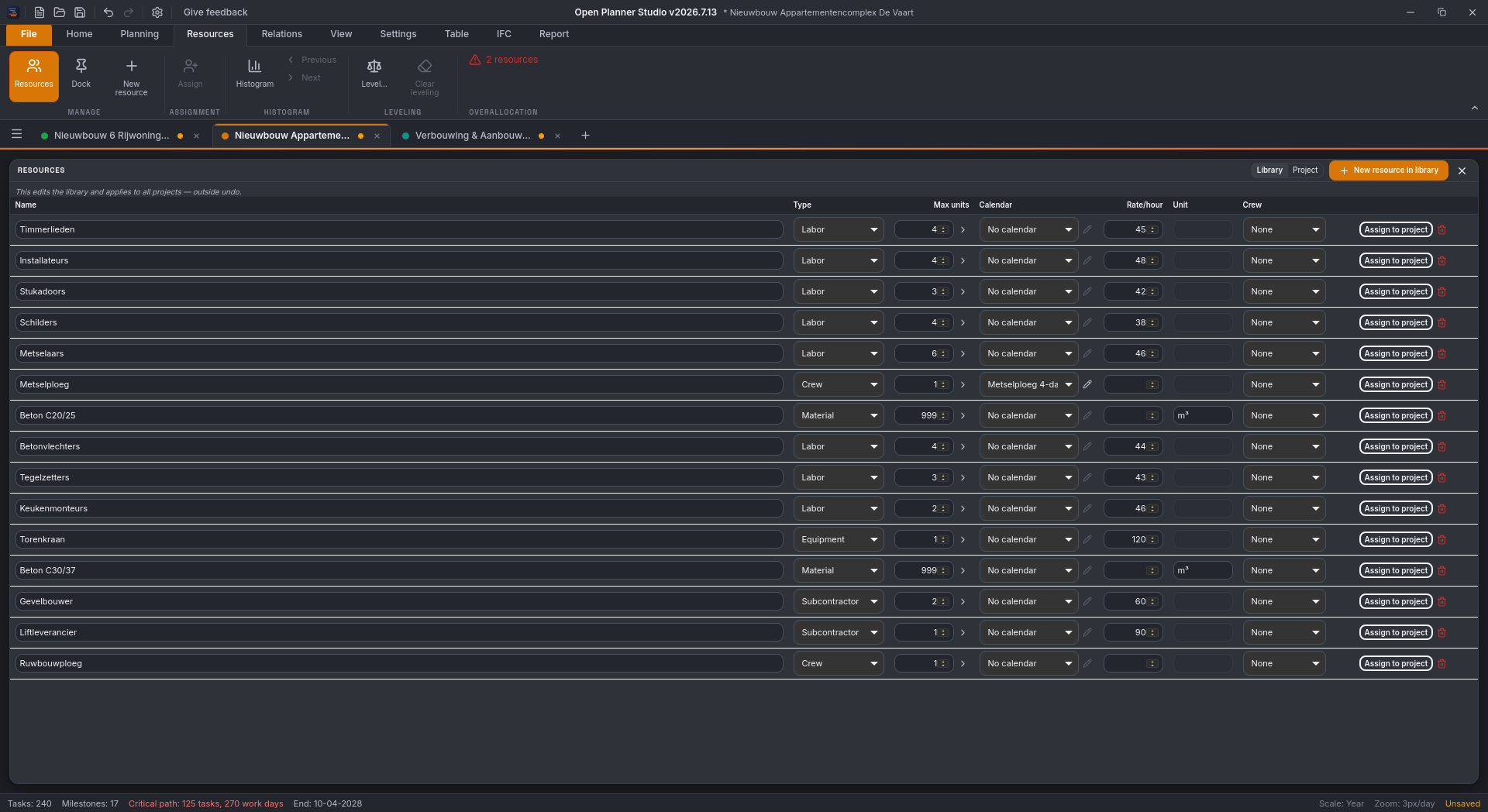
- The resource-leveling core gained controlled interruption and shared-capacity foundations. It can insert calendar-valid pauses into work (including hour-mode tasks), level a chosen task scope while treating the rest as fixed load, apply per-task overrun ceilings, and take an external pool ledger into account. A headless resource-library distributor can use that ledger to place document inputs sequentially against their remaining shared capacity; this release does not yet expose that cross-document distributor as a user-facing screen or write-back action.
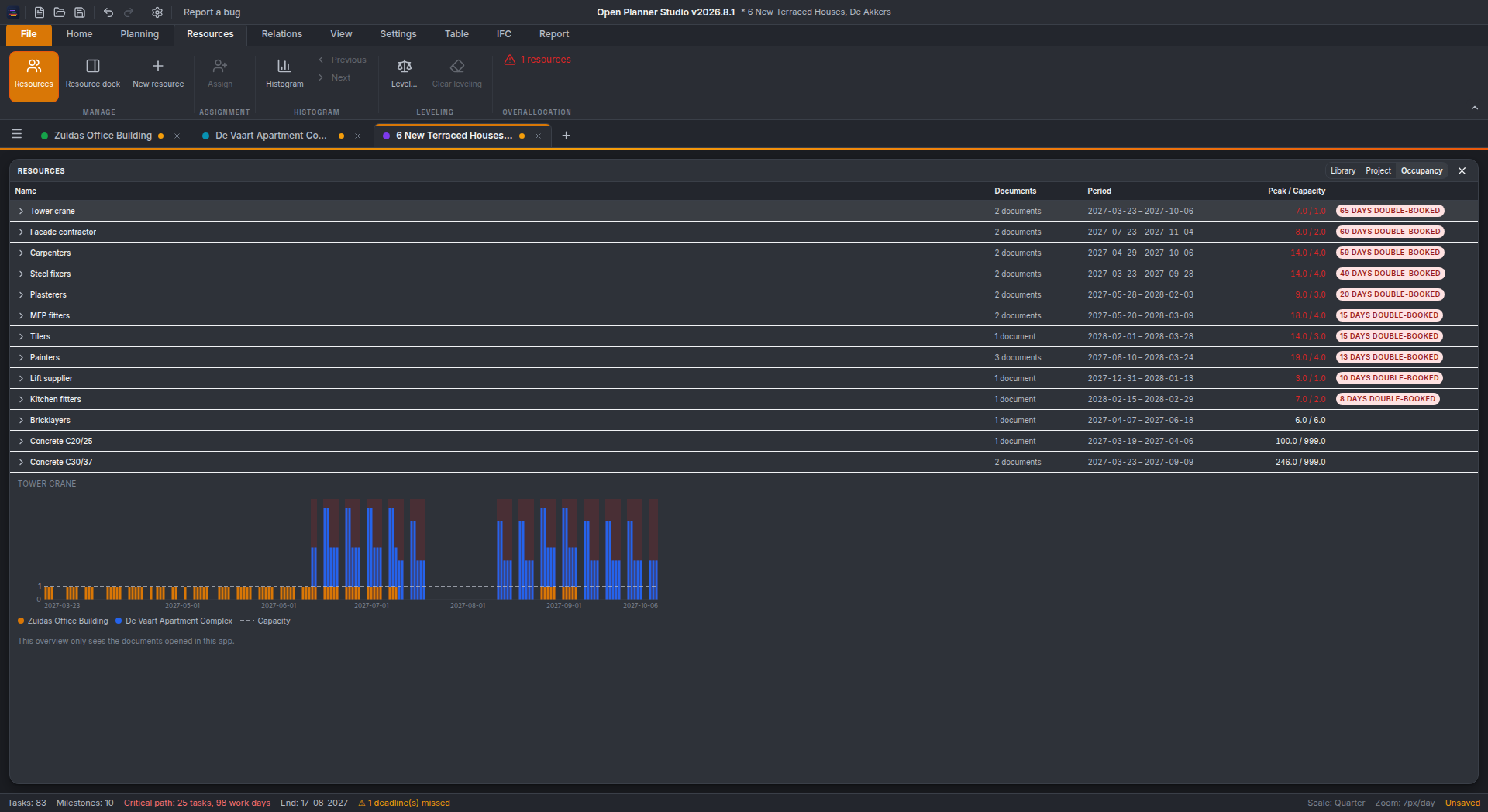
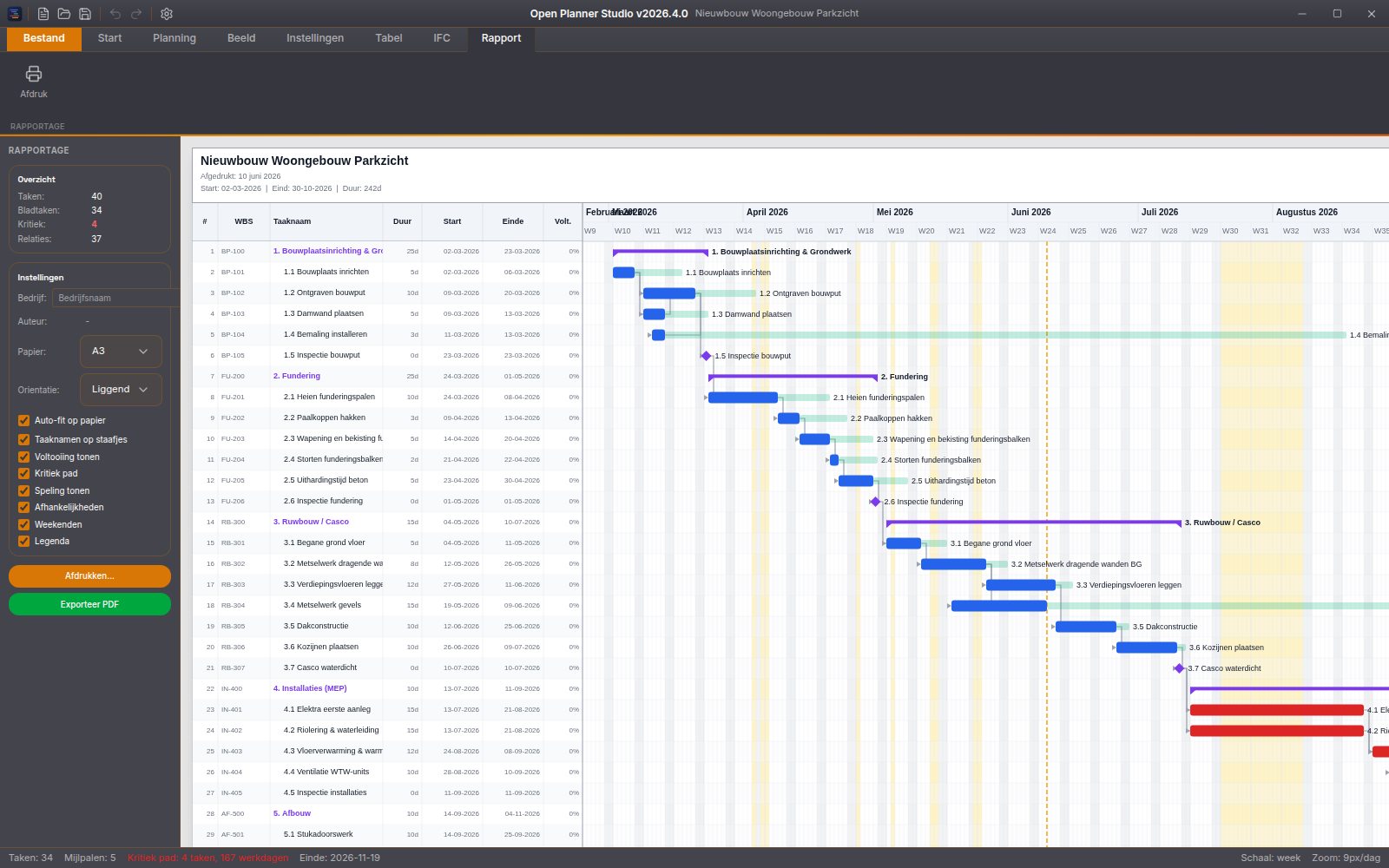
- Gantt reports gained clearer planning controls. Reports can use A2 paper, show a baseline overlay, follow the current filtered/grouped view, display a status or progress line, colour bars by task/category/resource/automatic mode, and optionally compress non-working days. The compressed timeline also uses alternate week bands so adjacent weeks remain readable.
- Saved filter presets are available from the filter workflow, and the resource panel can limit its displayed resources to the current task selection.
- Document-bound AutoSave is now available next to Save. Once a project has a known writable IFC file, the user may enable periodic writes back to that file. It deliberately remains separate from crash recovery: unsaved documents are never overwritten and recovery snapshots continue to protect changed open documents.
- The interface can now follow the operating system or browser colour scheme. A new opt-in switch in Settings and the welcome dialog resolves the system preference to Light or Dark, reacts live while the app is open, and keeps the resolved theme through the first paint so the transition does not reintroduce a startup flash. High Contrast remains an explicit manual choice.
Changed
- The Table view is no longer a separate editor with different interaction rules. It reuses the Gantt task-grid core, and the old Relations tab was retired after relationship editing and navigation reached parity in both grid surfaces.
- The Gantt is easier to navigate and reposition. Arrow-key navigation now works in the Gantt and histogram, bars can be moved vertically to another task row, the ribbon exposes Fit to project, and hour-bar dragging follows calendar working bands rather than a purely elapsed-time grid.
- The report preview was redesigned as a bounded, progressive page renderer. It renders pages locally at a selected quality, keeps a compact control strip and scroll position, and avoids creating one unbounded set of data URLs for a large report.
- Undo/redo, document activation and grid preferences now use a session event model with document-aware boundaries. This keeps a document's history from being offered against another open document while still allowing deliberate personal grid-preference changes to be undone.
- Extensions and their stored catalog data are now validated before they can become runnable. Invalid manifests, JavaScript, ZIP packages and corrupt IndexedDB records are classified and shown in quarantine instead of being treated as installed extensions; repaired storage replaces the matching quarantine entry atomically.
- The post-update experience is now driven by a local, versioned highlight catalog. Its fixed primary/secondary-card structure, localized copy and measured release statistics have explicit verification, so an update can show curated product changes without depending on a live release page.
Fixed
- Hour-mode scheduling and leveling now measure work on the task's real calendar. Fixes cover split tasks, calendar-aware delays and lags, effective hour bands, non-working gaps and the distinction between calendar feasibility and capacity. Started and completed tasks are correctly retained as fixed load instead of being shifted by leveling.
- The task grid received a focused usability and accessibility repair pass. Tab, Shift+Tab and Escape no longer trap keyboard users; AltGr and macOS Option can still start cell editing; the active cell follows the selected task; dropdowns show their full choices; and selection/drop indicators remain visible above cells.
- Grid geometry now remains usable at narrow sizes. Column resizing and dragging cover the intended interaction area, the chooser is constrained to the window, the last header is not obscured by its add control, and the Gantt/table splitter reserves sensible column space.
- Report preview quality switches no longer race stale image work. Pages are rasterized and cached locally with per-page budgets, object URLs are replaced safely, and the preview remains sharp without growing without bound on long reports.
- The MPP reader stops immediately when its monthly cursor cannot advance, preventing a stationary cursor from continuing through an invalid month traversal.
- Undo and snapshot handling now crosses Immer's draft boundary explicitly. The shared helper preserves the distinction between a producer's original state and its current draft, with a behavioral regression test for the invariant. Immer is also pinned to the exact reviewed version so local dependency updates cannot silently test different state semantics than CI.
- Collapsed ribbon groups retain readable labels, and long tooltips wrap instead of escaping the application window.
Documentation
- Added English and Dutch in-app guides for personal task types, and updated the calendar/hour planning guide to describe explicit units, safe conversion, working-time bands and breaks.
- Updated the English and Dutch recovery guide to distinguish always-on crash recovery from the opt-in writable-file AutoSave switch, including its browser permission boundary.
- Expanded the report, resource/histogram, filter and shortcut guides to cover the new controls and navigation. The release also adds regression documentation for the shared grid, Gantt interaction boundaries, extension validation and release-highlight contract.